
Is Caesar salad healthy? The romaine is genuinely doing its job. It’s really the dressing that changes the conversation.
On its own, the base of this salad has real nutritional value.
But Caesar dressing is calorie-dense and higher in sodium than most people account for, and restaurant portions tend to use two to three times more than what a controlled serving actually looks like.
It’s one of those quiet ways a salad stops being a light meal without really announcing itself.
Here’s what the numbers actually show and how much it matters depending on how you order it.
1. Is Caesar Salad Healthy? A Closer Look
Caesar salad has a reputation problem it doesn’t entirely deserve. The dish gets labeled unhealthy, usually by people who’ve seen a restaurant version drowning in dressing.
But is Caesar salad healthy when you look past the worst-case preparation? The answer is more nuanced than either the health-food crowd or the critics suggest.
1.1 What Is Actually in a Caesar Salad and Why It Matters
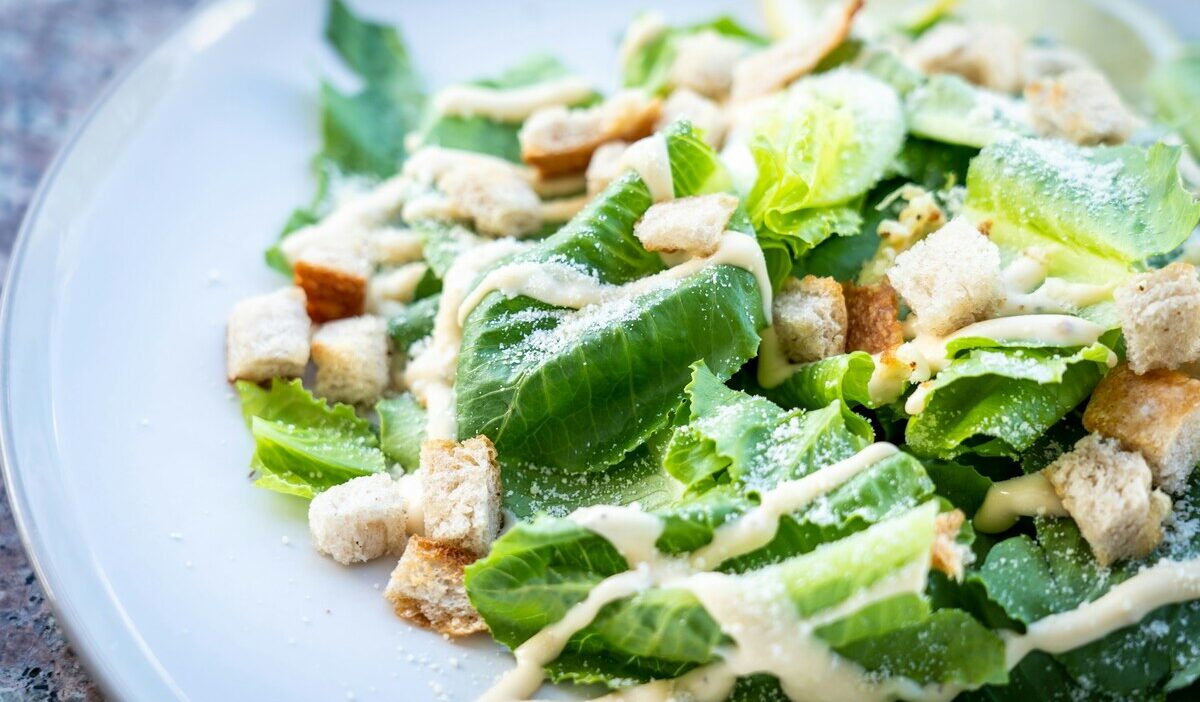
A traditional Caesar salad contains romaine lettuce, Caesar dressing, Parmesan cheese, and croutons. Each component has a distinct nutritional role:
- Romaine lettuce: low calorie, high in vitamins A and K, some folate and potassium. Genuinely nutritious and the foundation of the dish.
- Caesar dressing: traditionally made from egg yolk, olive oil, anchovy paste, garlic, lemon, and Parmesan. Two tablespoons contain approximately 150 to 170 calories and 15 to 17 grams of fat.
- Parmesan cheese: adds calcium, protein, and sodium. One tablespoon contains about 20 calories and 60 to 80 milligrams of sodium.
- Croutons: refined white bread, toasted with butter or oil. One-quarter cup adds 50 to 80 calories and refined carbohydrates with minimal nutritional value.
The nutritional outcome of a Caesar salad is almost entirely determined by how much dressing is used and the overall portion size.
1.2 Key Nutrients From Romaine Lettuce, Parmesan, and Anchovies
Romaine is one of the more nutritious lettuces.
Per two-cup serving, it provides over 100% of the daily value for vitamin K, 40 to 50% for vitamin A, meaningful folate, and reasonable potassium. Its fiber content contributes to satiety and digestive health.
Anchovies in Caesar dressing provide omega-3 fatty acids, selenium, and B12. The amount in a typical serving of dressing is small but contributes to the overall nutritional quality of traditional Caesar dressing versus commercial alternatives that omit them.
1.3 Health Concerns: Calories, Sodium, and Saturated Fat
The concerns with Caesar salad relate almost entirely to the dressing:
- Calories: Two tablespoons of Caesar dressing add 150 to 170 calories. Restaurant portions typically use three to four tablespoons, adding 450 to 680 calories from dressing alone before the rest of the salad is counted.
- Sodium: Caesar dressing is high in sodium from anchovies, Worcestershire sauce, and Parmesan. Three tablespoons can contribute 400 to 600 milligrams of sodium.
- Saturated fat: egg yolk and cheese contribute saturated fat. Two tablespoons provide 2 to 3 grams, which is moderate but accumulates with restaurant portions.
The croutons add refined carbohydrates that are the least nutritious component of the dish. They are the easiest to remove without changing the flavor profile of the salad.
>>> Read more: Is Salsa Healthy? Easy Explanation of the Nutrition Facts
2. How Different Caesar Salad Variations Fit Different Health Goals
The base Caesar salad has clear strengths and one consistent weak point. Variations address that weak point from different directions, and each one changes the nutritional outcome in a specific way.
2.1 Caesar Dressing: Calories, Fat, and Portion Size Considerations
Traditional Caesar dressing can fit into a balanced diet, although the ingredients and serving size make a noticeable difference.
That distinction matters because people searching is caesar salad dressing healthy are often comparing a traditional homemade dressing with the heavier bottled versions commonly used in restaurants and packaged salads.
A classic recipe made with egg yolk, olive oil, and anchovies contains monounsaturated fats along with small amounts of omega-3s.
Because of that, the dressing is not simply “empty calories” when used in moderation. Around two tablespoons is generally considered a reasonable serving and usually provides enough flavor for an entire salad.
The nutritional profile changes once commercial bottled dressings enter the picture. Many rely on cheaper oils, added sugar, and higher sodium levels to create a stronger flavor and longer shelf life.
As a result, some bottled versions reach 150 to 190 calories with 15 to 18 grams of fat and up to 500 milligrams of sodium per two tablespoons. Light versions reduce those numbers considerably, although the texture and richness are often different.
Even with traditional dressing, portion size still shapes the overall health impact most directly. Two tablespoons adds flavor without overwhelming the meal.
Once the serving doubles, the calories and sodium rise quickly, even though the eating experience usually changes very little.
2.2 Chicken Caesar Salad and Higher-Protein Variations
Whether a Caesar salad feels like a full meal or just a side usually depends on the protein and dressing.
People asking is chicken caesar salad healthy are often comparing a lighter homemade version with the heavier restaurant-style salads that use large amounts of dressing and croutons.
Adding grilled chicken changes the nutrition profile quite a bit because it contributes around 25 to 30 grams of protein without adding excessive calories or fat.
That extra protein helps make the salad more filling and balanced as a meal rather than just lettuce and dressing. That is also why many people wonder is a chicken caesar salad healthy compared to other common lunch or dinner options.
At restaurants, a chicken Caesar salad can range anywhere from 500 to 900 calories, depending on portion size, dressing amount, and toppings.
When the dressing is used more moderately, and croutons are skipped, the total often drops closer to 400 to 550 calories while still keeping strong protein content.
Salmon and shrimp can work well too, especially since salmon adds omega-3 fats that improve the overall nutritional profile of the dish.
2.3 Can Caesar Salad Fit Into a Weight Loss Diet?
A Caesar salad can fit into a weight loss diet, although the answer depends heavily on how it is prepared. People searching is caesar salad healthy for weight loss are usually surprised to learn that the lettuce itself is not the issue. Romaine is low in calories and fairly filling, while chicken or fish can add enough protein to help the meal feel satisfying. The dressing is what changes the calorie total most dramatically.
Because of that, asking for dressing on the side is often the most effective adjustment. Using about one tablespoon instead of the full restaurant portion can reduce the meal by roughly 200 to 400 calories. Skipping croutons lowers the total even further.
With those changes, a chicken Caesar salad can stay around 350 to 450 calories while still providing close to 30 grams of protein, which makes it a fairly strong option for weight loss compared to many restaurant meals.
>>> Read more: Is Ceviche Healthy? Nutrition Facts, Benefits, and Safety Tips
3. FAQs
How Many Calories Are in a Typical Caesar Salad?
A typical restaurant Caesar salad as a side (without protein) contains 300 to 500 calories depending on dressing volume and crouton quantity. As a main course with added chicken, 550 to 900 calories is the common range.
Is Caesar Salad Healthy if You Skip the Croutons?
Removing croutons improves the nutritional profile modestly. Croutons add 50 to 100 calories and refined carbohydrates with minimal nutritional benefit. Their removal makes Caesar salad lower in calories and carbohydrates.
What Is the Healthiest Way to Order a Caesar Salad at a Restaurant?
Order dressing on the side and add one to two tablespoons yourself. Choose a protein addition (grilled chicken, salmon, or shrimp). Skip or halve the croutons. Ask for extra romaine if the kitchen will accommodate it.
4. Conclusion
Is Caesar salad healthy? The romaine base and the nutritional components of traditional Caesar dressing are genuinely good. Restaurant portion sizes and heavy dressing applications are the primary reasons Caesar salad develops a poor health reputation.
With controlled dressing, a protein addition, and croutons reduced or removed, Caesar salad is a nutritionally strong meal option. Order the dressing on the side, use it sparingly, and add a lean protein. The salad you end up with is one of the better restaurant choices available.