

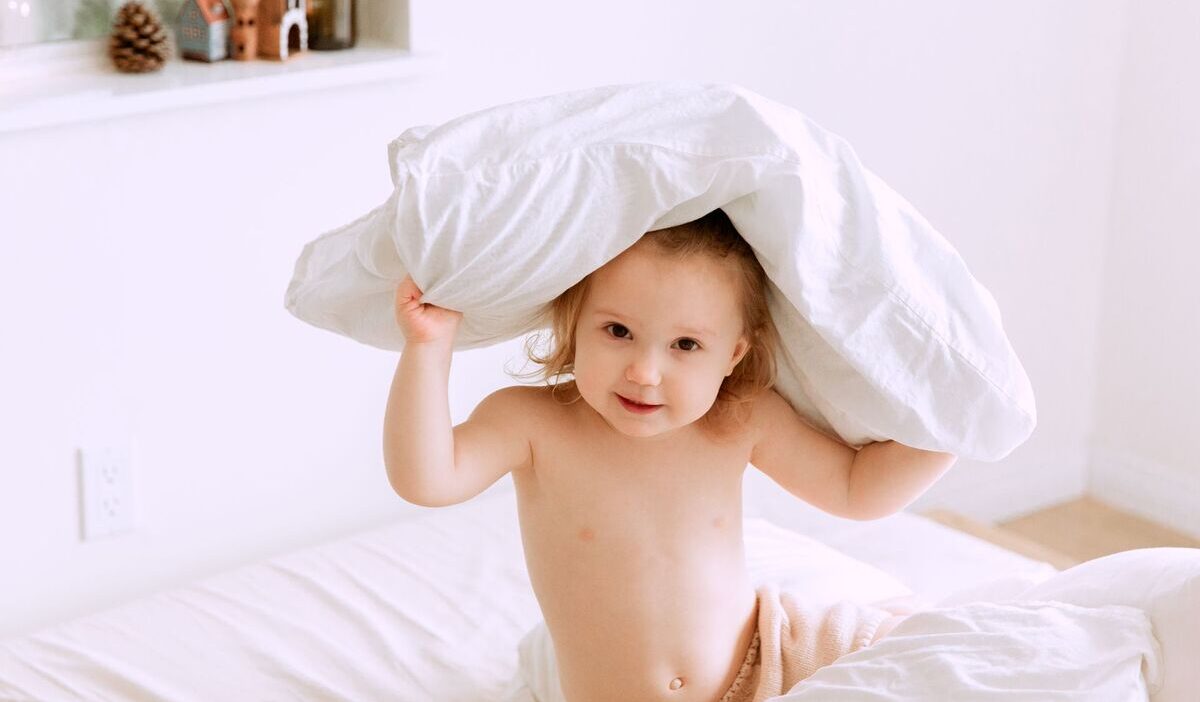
Bedtime routines for 2 year olds work differently from routines designed for younger toddlers because the resistance at this age is driven by autonomy, not just overstimulation.
The routine needs to build in small choices, predictable structure, and a clear physical wind-down sequence that the child’s body recognizes over time.
Why 2 Year Olds Need a Consistent Bedtime Routine
The developmental stage at age two makes consistency especially important. A 2 year old’s prefrontal cortex, the brain region that manages self-regulation, is still in very early development.
Without an external structure to anchor the transition to sleep, most 2 year olds will continue seeking stimulation and engagement because they genuinely cannot regulate the shift on their own.
Most 2 year olds still nap once per day, typically 1 to 2.5 hours. The timing of that nap directly affects how quickly the child can fall asleep at night.
A nap that ends after 3:30 PM pushes back the natural sleep window and makes a 7:30 PM bedtime unrealistic for many children.
Bedtime Routines for 2 Year Olds: Step by Step
The five-step sequence below covers the essential elements in the order that works with 2-year-old developmental needs. The total time should run 25 to 40 minutes from first warning to lights out.
Step 1: Give a Wind-Down Warning and Dim the Lights
Begin 30 to 40 minutes before target sleep time with a verbal warning: ‘Ten more minutes, then we start bedtime.’
This matters because 2 year olds resist abrupt transitions more intensely than scheduled ones
Pair the warning with dimming overhead lights and turning off screens. The light shift alone begins suppressing stimulating cortical activity.
Give a second warning at five minutes.
Step 2: Bath or Warm Wash Up
A short warm bath (10 minutes) is the most effective single step in the sequence. The rise and fall of core body temperature following a warm bath is a documented physiological trigger for sleep onset.
On nights when a full bath is impractical, a warm washcloth on the face and hands provides a scaled-down version of the same cue. The ritual matters as much as the warmth, so maintain the same sequence even on abbreviated nights.
Step 3: Pajamas, Brush Teeth, and Potty
This step serves two functions. Practically, it handles hygiene. Developmentally, it provides a sequence of small, manageable tasks that 2 year olds can participate in independently. Let the child choose which pajamas from two options, which toothbrush to use, and whether to sit on the potty before or after teeth. These micro-choices satisfy the autonomy drive without creating open-ended decision points that stall the routine.
Step 4: Storytime and Quiet Cuddles
One to two books, read in bed or in a consistent reading location, provides the physical closeness that reduces pre-sleep anxiety at this age. At 2, attachment needs are high and separation anxiety peaks.
Storytime addresses the attachment need before the goodbye, which is more effective than attempting to manage it after lights out. Keep the book selection consistent or allow one choice from a small basket of approved options.
Step 5: Lights Out With a Comfort Object
The most ideal bedtime routines for 2 year olds can end with a brief, scripted goodbye: one specific phrase, one specific physical affection, lights to a dim nightlight or off.
Place the comfort object (a stuffed animal, a blanket) with the child.
The scripted goodbye matters because unpredictability at this transition is what 2 year olds exploit most effectively. A goodbye that is always the same length and sequence offers nothing to negotiate.
Read more: Guide to Creating an Ideal Toddlers Bedtime Routine
What Time Should a 2 Year Old Go to Bed?
The right bedtime routines for 2 year olds are determined by wake time, nap timing, and total sleep needs, not by a fixed clock number. Two year olds need 11 to 14 hours of total sleep per 24-hour period, including any nap.
Best bedtime window for 2-year-olds is 6:00 to 7:00 AM, and naps from 12:30 to 2:30 PM, a 7:30 to 8:00 PM bedtime is appropriate.
A child who wakes at 7:30 AM and naps until 3:00 PM may not be ready until 8:30 PM.
Most sleep researchers and the American Academy of Sleep Medicine target 7:00 to 8:30 PM as the appropriate range for this age group, with earlier times corresponding to earlier wake times and earlier nap end times.
Tips for Making the Routine Stick
The routine works through repetition, but three specific tactics help it become stable faster and handle the disruptions that inevitably arise.
Use Micro-Choices to Reduce Power Struggles
The core mistake at age 2 is presenting bedtime as a binary: time for bed versus not time for bed. This activates the autonomy drive directly. Instead, build bounded choices into each step.
Not “time for a bath” but “do you want the blue towel or the yellow towel?”.
Not “brush your teeth” but “do you want to brush the top teeth first or the bottom teeth?”.
The choice is real. The outcome (bath happens, teeth get brushed) is not negotiable.
Try a Visual Bedtime Chart for 2 Year Olds
A visual chart with simple drawings or photos of each step shifts authority from the parent to the sequence.
At age 2, language comprehension exceeds expressive language, so a visual reference that the child can point to and understand is more effective than verbal instructions alone.
Staying Consistent During Travel or Schedule Changes
Travel disrupts the environmental cues (the familiar room, the regular lighting) but the behavioral sequence can travel with you.
Pack the same comfort object, bring a small laminated copy of the chart if the child is chart-dependent, and run through the same steps in the same order regardless of location.
FAQs
How Long Should a Bedtime Routine Be for a 2 Year Old?
25 to 40 minutes is the practical target. Under 20 minutes often skips steps that matter for physiological wind-down. Over 45 minutes tends to create more stalling opportunities than it resolves.
A consistent 30-minute routine covering one bath or wash-up, hygiene, one to two books, and a scripted goodnight covers the essential elements at an appropriate pace.
Should Bath Time Be Every Night?
A full bath every night is not necessary and can feel burdensome for caregivers managing a complete routine after a full day. Two to four baths per week is sufficient for hygiene.
What matters more than nightly bathing is the warm wash-up ritual on non-bath nights, which preserves the physiological wind-down cue without the full routine.
What If My 2 Year Old Still Wakes Up at Night?
Nighttime waking at age two is common and typically unrelated to the bedtime routine itself.
The most common causes are developmental milestones (language spurts, motor development), teething, illness, or a sleep association that requires parental presence to resettle. If the child wakes and needs comfort, respond briefly and consistently.
Conclusion
Bedtime routines for 2 year olds work best when it is short, sequential, and built around the specific developmental reality of this age: high autonomy drive, strong attachment needs, and a body that responds to physical wind-down cues before it can self-regulate emotionally.