

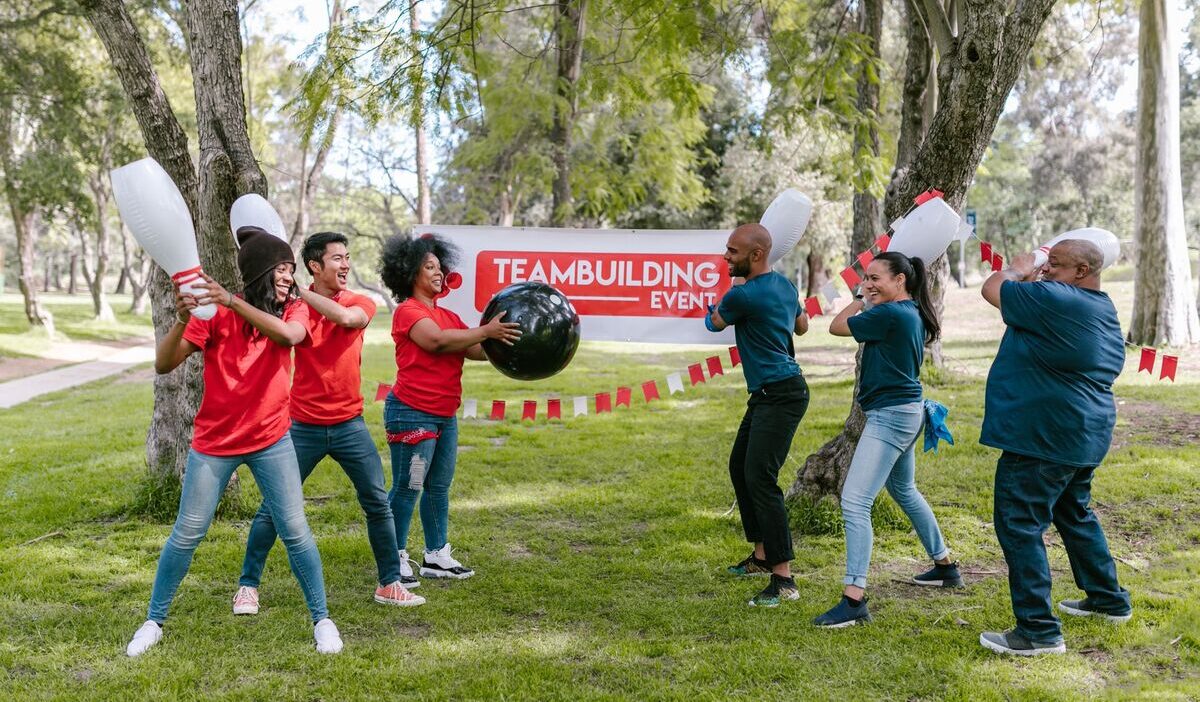
Outdoor team building activities can help teams connect in a way that feels more natural than another meeting room exercise. Fresh air, movement, and a different setting can make people more open to conversation, problem-solving, and shared experiences.
The best activity depends on your team size, budget, location, and goal, whether that is building trust, improving collaboration, or simply giving employees a break from the usual work routine.
Use the ideas below to choose an outdoor event people will actually want to join.
1. Why Outdoor Team Building Can Work So Well
Team building outdoor activities can work differently from indoor sessions because they change the setting and reduce some of the office cues associated with hierarchy and routine performance.
Research has linked nature exposure with benefits such as lower stress, better mood, and more prosocial behavior. A study in the Journal of Environmental Psychology also found that exposure to nature can encourage cooperative and sustainable behavior.
Outdoor team building may benefit from these effects, but the outcome still depends on the activity design, group dynamics, and how well the event is facilitated.
The other advantage is novelty. People who sit in the same conference room for months respond differently when the environment changes. New surroundings prime creative thinking and make shared experiences more memorable, which is what good team building is trying to produce in the first place.
2. Outdoor Team Building Activities
Six outdoor team building activities for adults cover a wide range of team sizes, budgets, and desired outcomes. Each one fosters different skills and suits different group dynamics.
Scavenger Hunts
A well-designed scavenger hunt builds navigation, communication, and creative problem-solving simultaneously. Teams compete to find items, complete tasks, or answer clues across a defined area.
The format works for groups of 10 to 200 and scales easily by adding more checkpoints or adjusting the time limit. Photo-based hunts using smartphones are particularly effective since they produce shareable content that extends the team memory beyond the event itself.
Tug-of-War and Relay Races
Physical competitions like tug-of-war and relay races create clear shared stakes and immediate results.
They require little instruction, but they should be adapted for different fitness levels, mobility needs, and comfort with physical competition. The physical nature also produces natural moments of humor and spontaneous connection that planned activities rarely generate.
For mixed-ability groups, include low-impact alternatives such as walking relays, puzzle stations, or team cheer roles so participation does not depend only on physical strength.
Egg Drop Challenge
Teams compete to build a structure that protects a raw egg from a drop. Using only basic materials (straws, tape, plastic bags, or newspaper), teams have a set time to design and build before the drop test.
This classic engineering challenge works particularly well for teams that rarely collaborate across departments, since it requires combining different kinds of thinking under a shared constraint.
>>>Read more: Free Things to Do in San Francisco: Amazing Sights and Local Gems
Hiking or Group Outdoor Skills Workshops
A guided hike creates sustained time for informal conversation that structured activities do not. The shared physical effort, the absence of devices, and the changing scenery produce a different quality of interaction than any office-based session.
Adding a skills component, like navigation, nature identification, or wilderness first aid basics, gives the experience a learning dimension alongside the relational one.
Choose a route with clear distance, terrain, bathroom access, shade, and opt-out options so the activity works for more than just the most outdoorsy employees.
Outdoor Cooking Challenges
Groups split into teams, each given the same set of ingredients and cooking equipment, and compete to produce the best dish within a time limit.
Cooking tasks require planning, delegation, and real-time adaptation when things do not go as expected, all skills that transfer directly to work contexts. The food itself provides a natural shared celebration at the end, regardless of who wins.
Plan ahead for food allergies, dietary restrictions, safe food handling, and access to clean water before choosing this activity.
Volunteer or Community Service Projects
Team building through community service, such as trail maintenance, park restoration, or building projects for local nonprofits, combines relationship-building with purpose.
Groups that work together toward a meaningful goal outside their normal professional context may find the experience more memorable and purpose-driven than a purely recreational event.
Service projects can also support organizational culture when employees understand the purpose and the project is planned respectfully with the community partner.
3. Outdoor Team Building Activities in NYC
Outdoor team building activities in NYC benefit from large parks, waterfront access, and many event vendors, but permits, group size, season, and public-space rules should be checked early.
- Central Park scavenger hunts: the park’s scale, landmarks, and history make it ideal for team-based exploration games. Several professional event companies run customized hunts with digital clues, photo tasks, and leaderboards, but larger groups should confirm park rules, meeting points, and any permit needs before booking.
- Hudson River kayaking: Kayaking on the Hudson is available seasonally through public programs and outfitters, but group size, reservations, waivers, and weather rules vary by provider. The water environment creates a natural equalizer since most participants share a similar baseline skill level.
- Governor’s Island activities: Governors Island is reached by ferry and offers a contained outdoor environment for field days, picnics, and casual sports events, with strong skyline views and clear arrival logistics.
- Community garden or park restoration projects: NYC Parks and partner programs offer volunteer projects for groups, including activities such as planting, cleanup, vegetation removal, and park beautification.
- Brooklyn Bridge Park field days: has athletic spaces that can work for field days, relay races, and sports activities, but permits and group-size limits should be checked before planning the event.
4. How to Plan an Outdoor Team Building Event
Planning team building activities outdoor requires more contingency thinking than an indoor event, but the process is straightforward when covered in the right order.
- Define the goal before choosing the activity. Decide whether the event is meant to build trust, encourage cross-team collaboration, celebrate a milestone, or simply give people time together outside work.
- Set the budget early and include all costs. Account for food, transportation, permits, facilitators, equipment, insurance, tips, and backup-space fees.
- Choose a date with weather contingency built in. Have a rain date, indoor backup, or modified light-rain version before invitations go out.
- Confirm accessibility and inclusion. Check walking distance, terrain, restrooms, seating, shade, dietary needs, and whether non-physical roles are available.
- Communicate the plan clearly. Tell employees what to wear, what to bring, how long the activity will last, and whether participation is optional.
- Debrief afterward. Keep it short and practical by asking what worked, what felt useful, and what the team should carry back into normal work.
>>> Read more: Tech Activities Outdoor for Kids: Apps, Gadgets, and STEM Ideas
5. FAQs
How Many People Do You Need for Outdoor Team Building?
Many outdoor team activities work with as few as 8 people and can scale to larger groups with more teams, facilitators, and space. Scavenger hunts scale especially well, while cooking challenges and egg drop activities usually work better in smaller groups.
What Is a Good Budget for Outdoor Team Building Activities?
Budget varies by activity, location, and group size. Self-run games may cost $20 to $50 per person for supplies and logistics, while hosted activities, permits, food, transportation, or facilitators can raise the cost significantly.
What if the Weather Does Not Cooperate?
Build a weather contingency into every outdoor event plan. A rain date, indoor backup venue, or light-rain version can work, but cancel or move indoors for lightning, extreme heat, poor air quality, or unsafe conditions.
How Long Should an Outdoor Team Building Event Last?
Two to four hours is the practical range for most workplace team building events. Under two hours often feels rushed and does not allow enough time for the informal conversation that produces real relationship value.
Conclusion
Outdoor team building activities work best when they feel purposeful rather than forced. A good event gives people space to interact differently, notice strengths outside their usual roles, and build memories that do not come from another workday agenda.
Whether the team chooses a scavenger hunt, a service project, or a simple field day, the real value comes from planning an experience that feels accessible, safe, and worth everyone’s time.