

Traditional American food is not one single cuisine, but a mix of Indigenous foodways, regional cooking, immigrant traditions, and dishes that changed over time on American soil.
That is why a meal can feel deeply American whether it is cornbread, frybread, barbecue, macaroni and cheese, a hot dog, or a bowl of chili.
To understand what makes these foods traditional, it helps to look beyond the plate and see the history, geography, and communities behind them.
1. What Is Traditional American Food?
The concept of traditional American food depends on whose tradition is being counted. Food eaten across what is now the United States for thousands of years before European contact is traditional in the deepest sense.
The dishes that came with colonists, settlers, and immigrants and transformed on American soil are also traditional in their own right.
Many dishes most people call American food today became widely recognized during the 19th and 20th centuries, shaped by industrialization, immigration, and cultural exchange across a large, regional country.
2. Traditional Native American Food
Long before European contact, Indigenous peoples across the continent had developed sophisticated food systems adapted to their environments. Several of these foods became foundational to American cuisine as a whole.
Corn, Beans, and Squash
The Three Sisters, corn, beans, and squash, were cultivated together by many Indigenous farming cultures across parts of North America.
Corn in particular became so fundamental to the American diet that its influence extends from cornbread in the South to bourbon whiskey, corn syrup, and tortillas.
These three crops supported many Indigenous communities and remain important in American cooking today.
Pemmican
Pemmican, made by many Plains peoples, combined rendered fat, dried meat, and sometimes berries into a dense, high-calorie food that stored well without refrigeration.
It was a critical protein source for long journeys and a model that influenced later American preserved food traditions.
Frybread
Frybread emerged from a painful history: Navajo people developed it using government-issued ingredients such as white flour, sugar, and lard after forced relocation during the Long Walk era in the 1860s.
It became a symbol of resilience and survival, and remains culturally significant for many Native communities despite ongoing debates about its place in Native American food identity.
Wild Rice
Wild rice, harvested and stewarded by Anishinaabe and other Great Lakes peoples for centuries, is not botanically rice but the seed of an aquatic grass.
It remains an important cultural and dietary staple for Great Lakes tribes and has found a place in broader American cooking as a side dish and salad ingredient.
Salmon, Game, and Foraged Foods
Pacific Northwest peoples built sophisticated food cultures around salmon, which was smoked, dried, and traded across large distances.
Game animals, shellfish, acorns, and a vast range of foraged plants sustained Indigenous communities in every region and informed the foraging and hunting traditions that persisted in settler communities.
>>> Read more: Is Ceviche Healthy? Nutrition Facts, Benefits, and Safety Tips
3. Classic American Comfort Foods
The dishes most associated with American comfort food reflect diverse origins that were absorbed and adapted into a broadly shared national food culture over the 19th and 20th centuries.
Fried Chicken
Fried chicken in the American South is often described as a fusion of frying techniques associated with Scottish settlers and West African cooking knowledge carried by enslaved people.
The result is a dish that cannot be credited to a single origin and whose development was inseparable from the history of enslaved labor in the South.
Mac and Cheese
Macaroni and cheese has roots in European pasta-and-cheese dishes and was helped into early American elite dining through Thomas Jefferson’s household, especially the work of James Hemings, Jefferson’s Paris-trained enslaved chef.
It later became a broader national comfort food through home cooking, Black American food traditions, and industrial products like boxed macaroni and cheese. Both the baked and stovetop versions remain among the most widely eaten dishes in the country.
Meatloaf
Meatloaf developed in American home kitchens as a practical way to stretch ground meat with fillers like breadcrumbs and eggs.
Its form has parallels in European loaf-style preparations brought by German and Scandinavian immigrants, adapted to American household economies throughout the early twentieth century.
Hot Dogs and Burgers
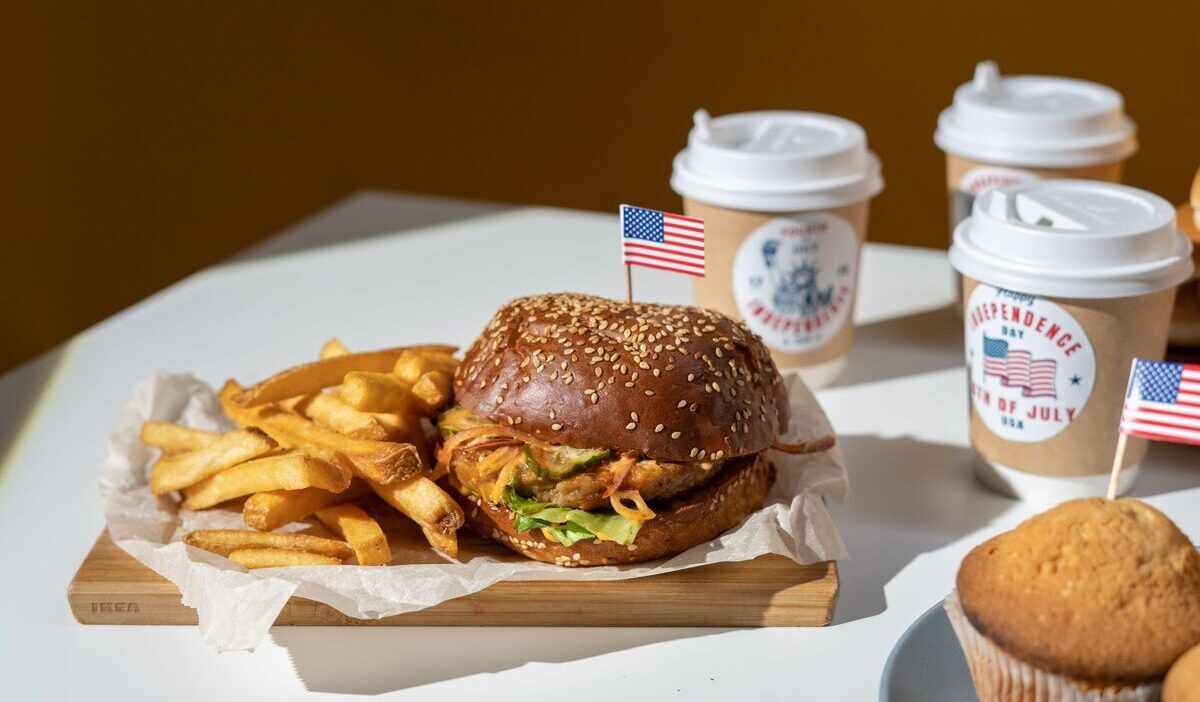
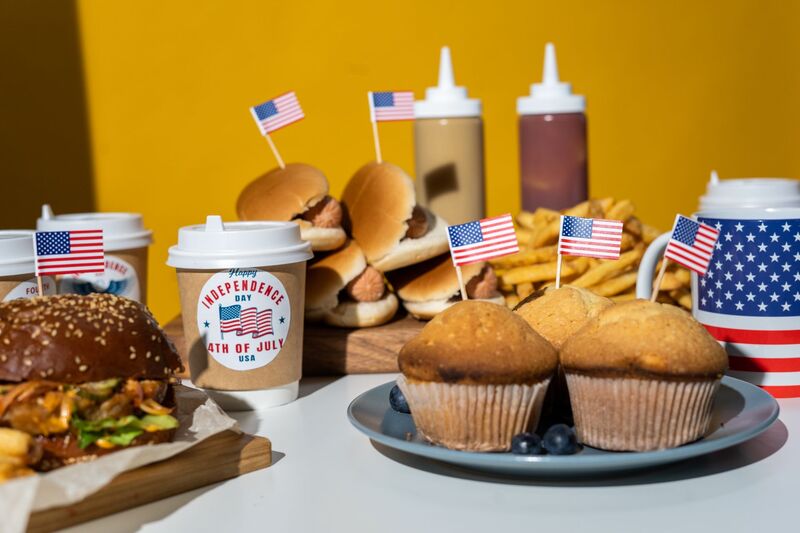
Hot dogs trace their form to German Frankfurt sausages, brought to the US by German immigrants and transformed into a street food and ballpark staple.
Hamburgers derive their name from Hamburg, Germany, but the exact origin of the American hamburger sandwich is disputed, and the mass-produced fast food burger evolved distinctly in the United States.
4. Traditional American Foods by Region
Regional variation is one of the most defining features of traditional American food. Geography, climate, and the cultural groups that settled each area produced distinct cuisines that persist today.
The South
Southern food is defined by the intersection of African, Indigenous, and European culinary traditions.
Barbecue, fried chicken, collard greens, cornbread, okra, black-eyed peas, and rice dishes like Lowcountry perloo all reflect this layered heritage.
West African foodways, carried by enslaved people, were among the most important influences on Southern cuisine.
The Northeast
New England food centers on seafood, particularly clam chowder, lobster, and cod, alongside beans, brown bread, and the influence of British colonial cooking.
The Mid-Atlantic states absorbed Dutch, German, and Jewish immigrant food traditions, producing the deli culture of New York City and the pretzel and scrapple traditions of Pennsylvania Dutch country.
The Midwest
The Midwest reflects German, Scandinavian, and Eastern European immigrant food traditions alongside the agricultural abundance of the region.
Casseroles, bratwurst, pierogies, hot dish, and, in some Upper Midwest communities, lutefisk are regional staples. The state fair food tradition, featuring deep-fried and novelty foods on sticks, has become a cultural marker of Midwestern summers.
The West Coast
California cuisine emerged in the late twentieth century as a distinct approach emphasizing fresh, seasonal, local ingredients.
The state’s agricultural richness and cultural diversity, including significant Japanese, Chinese, Mexican, and Filipino communities, produced a food culture that both reflects immigrant contributions and influences national eating habits toward lighter, produce-focused meals.
The Southwest
Southwestern food blends Indigenous, Spanish colonial, and Mexican culinary traditions into the Tex-Mex and New Mexican cuisines now familiar across the country.
Chiles, beans, corn, and beef feature prominently. Green chile stew in New Mexico, fajitas in Texas, and Navajo tacos each represent different histories within the broader Southwest.
>>>Read more: Is Chicken Salad Healthy? Nutrition Facts and What Actually Matters
5. How Immigration Shaped American Traditional Food
Every wave of immigration left a permanent mark on American food. The Library of Congress’s food history collection documents how immigrant communities established food traditions that eventually moved from ethnic enclaves into the American mainstream.
- German immigrants brought hot dogs, sausages, pretzels, sauerkraut, and the hamburger tradition that American fast food later industrialized
- Italian immigrants helped popularize pizza, pasta, red-sauce restaurants, and Italian American cooking in the United States
- Mexican, Indigenous, and Southwestern food traditions helped make chiles, corn tortillas, tamales, tacos, and regional chile-based dishes central to American eating
- Chinese American cuisine, shaped by Chinese immigrants adapting to U.S. ingredients, markets, and discrimination, helped create or popularize dishes such as chop suey and General Tso’s chicken
- Jewish deli foods, particularly bagels, lox, pastrami, rye bread, and matzo ball soup, moved from the Jewish immigrant communities of the Northeast into mainstream American eating
- African and African American cooks, often without credit, shaped Southern cuisine through techniques, ingredients, and dishes that became foundational to American food
6. FAQs
What Food Is Considered the Most American?
Answers vary, but hamburgers, hot dogs, apple pie, fried chicken, barbecue, and macaroni and cheese are often cited. Each has complex origins and became “American” through adaptation over time.
How Has Immigration Shaped Traditional American Food?
Profoundly. American food as it exists today is largely the product of immigrant contributions across generations. Italian, German, Chinese, Mexican, Jewish, and West African culinary traditions all entered the American food mainstream.
What Is the Difference Between American Food and Native American Food?
Native American food refers to the diverse Indigenous food traditions that existed long before European contact and continue today, including foods such as the Three Sisters, pemmican, wild rice, salmon, game, corn dishes, beans, squash, and foraged plants.
What Do Americans Traditionally Eat on Thanksgiving?
Many U.S. Thanksgiving meals center on roast turkey, stuffing, cranberry sauce, mashed potatoes, sweet potatoes, green bean casserole, and pumpkin pie, though dishes vary widely by region, family, and cultural background.
Conclusion
Traditional American food is best understood as a living collection of stories rather than a fixed list of dishes.
Some foods come from Indigenous traditions that long predate the United States, while others were shaped by migration, hardship, adaptation, and regional identity.
The result is a cuisine that keeps changing while still carrying traces of the people and places that built it.